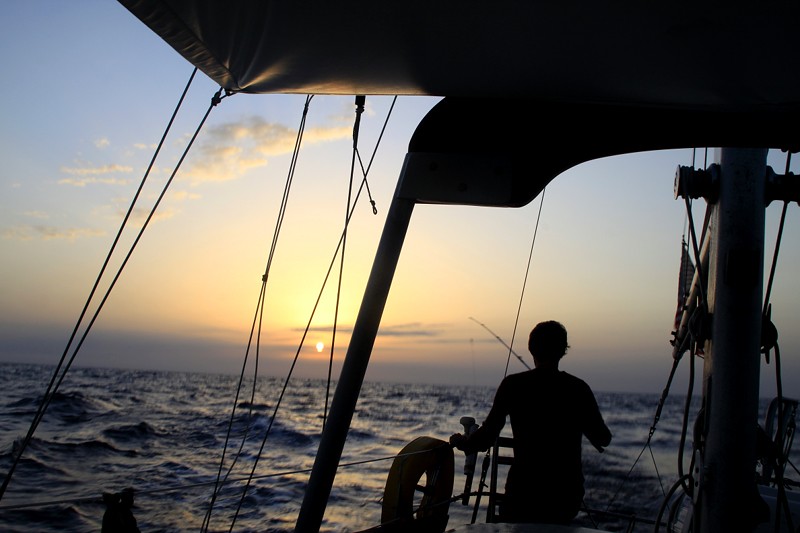
Bow-legged Full Moon
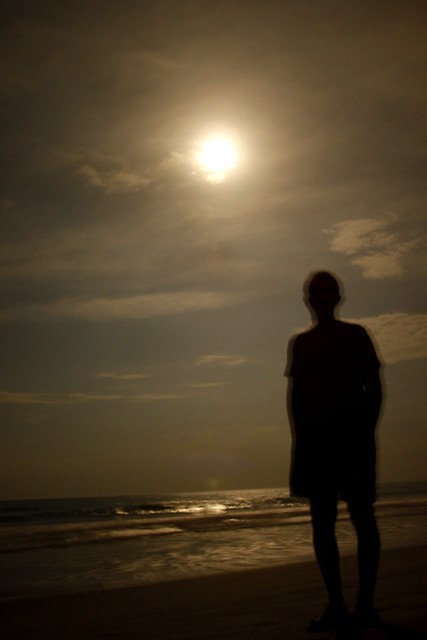
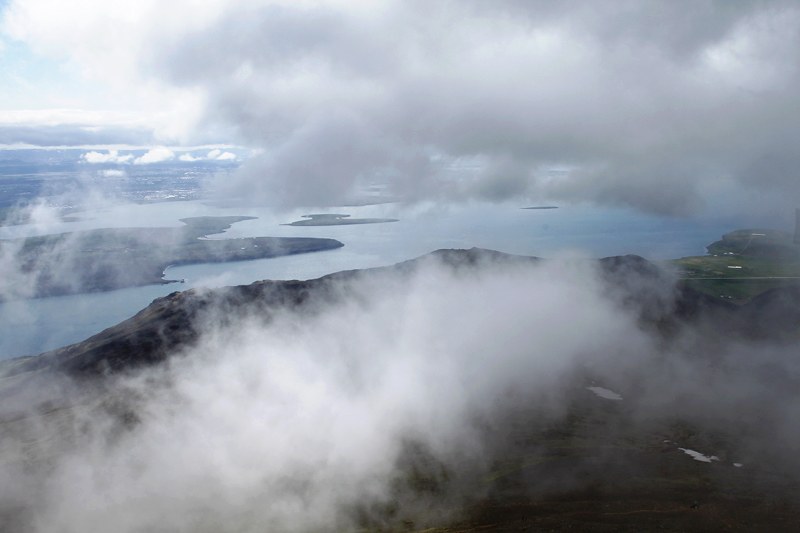
Esja at the top. In the clouds.
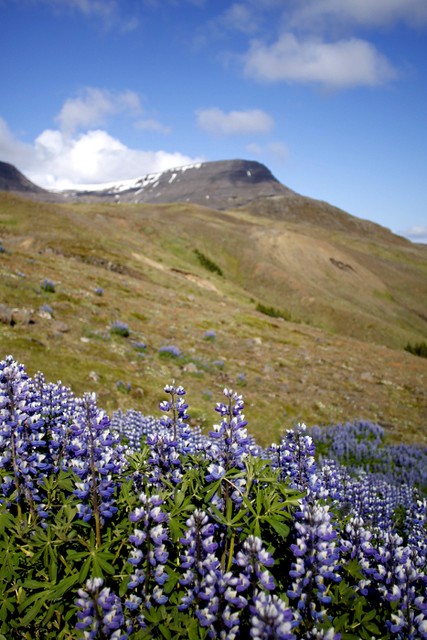
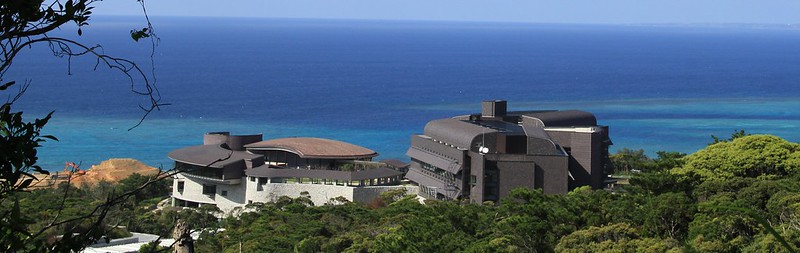 Photo by OIST
I wrote this article back in January. It gives a nice overview of this neat institute, so I thought I'd publish it here.
The 21st century scientific climate may be turning its back on the specialist. To bring Japanese science up to speed, a new graduate university on Okinawa plans to foster the growth of a new breed of interdisciplinary researchers. With substantial funding from the Japanese government, state-of-the-art equipment, a growing faculty of world-renowned researchers, and an island setting with highs in January hovering around 20ºC, young scientists can go to this institute to study, perchance to dream big.
At the Okinawa Institute of Science and Technology Graduate University (OIST) even the architecture demands communication among its scientists. To get to their respective laboratories from the campus living facilities, researchers will first have to walk through a pedestrian tunnel, into elevators that rise up a vertical light shaft, through the Center Building and out to the lab buildings. The campus design causes "everyone to meet each other everyday," says John Dickison, the OIST Vice President for Buildings and Facility Management, in the institute's informational movie. "It is not possible to work at OIST and spend all your time tucked away in your little unit corner."
 |
| Photo by OIST |
 |
| Photo by OIST |


I often keep my eye out on kickstarter for people doing neat projects and I recently came across a guy who is making musical instruments out of industrial waste. Assuming Perry gets the $15,000 of funding he requested to build the musical machines, in August 2012, musicians will put on a performance with these motors, solenoids, pneumatics, and hydraulics from factories of the past.
Though it's quite obvious after the fact, it never occurred to me before that art can be a form of waste reduction. Before when I thought of the 'reuse' in 'reduce, reuse, recycle,' tupperware or second hand clothing stores usually came to mind. So I wonder now, how much of an impact could art have on society's dire need to shrink its landfills?
 Do you remember the story of the Great Auk, or as Icelanders like to call it, the geirfugl? The history of this extinct bird is staple curriculum in Icelandic schools, probably because three Icelanders killed the very last mating pair about 170 years ago. However, "the history of the Great Auk has faded away" in Iceland, says Kristinn Haukur Skarphéðinsson, wildlife ecologist at the Icelandic Institute of Natural History. Though at first, he says, "nobody knew they were killing the last auk," as soon as the truth of the matter revealed itself, Icelanders had to carry the burden of a "collective guilt that we did the Great Auk in."
But we have been massacring this poor, clumsy bird before humans were technically humans. Yes, believe it, Neanderthals hunted Great Auks over 100.000 years ago. And a whole lot of death occurred between then and that notable day of July 3, 1844 when the book of Great Auk was slammed shut. So who should really be held responsible for the extinction of the Great Auk? How much of the blame should Icelanders carry on their shoulders? Could the bird itself take some of it? Maybe just a little?
POINTING FINGERS, IF ONLY LITTLE ONES
The Great Auk, in some ways, had it coming. Living in the wilds of the North Atlantic and having a picky disposition when selecting breeding grounds is akin to accepting only foie gras for dinner during the Irish potato famine. Great Auks would only breed on rocky, remote islands near easily accessible food sources. They'd settle with no less than islands with sloping shorelines, which gave the birds easy access to the ocean, where they spent the majority of their time.
The birds were excellent swimmers, but their ability to traverse land resembled a drunken Icelander on a weekend night in Reykjavík. Just as easily as you could net a hipster leaving Bakkus at 5am on a Saturday, you could casually stroll up to a geirfugl, put 'em in a bag and eat 'em for dinner with some potatoes (the bird, not the hipster). For some strange reason, these animals didn’t have an innate fear of humans, which many cultures took advantage of for thousands of years, including the Maritime Archaic people of Newfoundland and Saqqaq Inuits of Greenland.
BUT IT'S NOT OKAY
Though the Great Auk made it super easy for us to wipe them out, it doesn't exactly warrant our overexploitation. Yeah, you could probably make a living out of mugging old ladies on the street, but the ease of it doesn't make it morally acceptable (unless they're giving you sass about your haircut, or something). Frankly, when pillows become more valued than the survival of a species, it's hard not to wonder whether humanity had its priorities straight.
Starting in the eighth century, Great Auks were hunted in droves for their feathers. By the mid-sixteenth century, the breeding colonies along the European boundary of the Atlantic were almost completely wiped out by humans smitten with selling the luxury of down pillows. Finally by 1775, the Brits banned the killing of auks for their feathers and eggs, though the birds could still legally be killed for bait and food. This was one of the first environmental laws, which, in many people's eyes, made the Great Auk the "emblem for extinct birds," says Kristinn.
Though the severity of public flogging, the punishment for killing an auk for feathers, was discouraging, anyone with minimal intelligence could deduce an easy way out of publicized embarrassment and torture: say you're hunting the auk for bait (“Yes, officer, it was only a cigarette, I swear.”), and save the feathers as a keepsake of your trials and tribulations at sea.
But anything that's worse than reckless overindulgence in life, is reckless overindulgence in death. In a grave near Port of Choix, Newfoundland that dates back to around 2.000 B.C., archaeologists found a person buried in a suit made of more than 200 Great Auk skins, the heads left on for extra bling.
THE BEGINNING OF THE END
Nothing really tops the way the last Great Auk of the British Isles was killed. Sorry Icelanders, you didn't win the barbarian award this time around. In July of 1840 on the Saint Kilda archipelago in Scotland, three local men caught and killed the very last Great Auk of the region. They tied the bird up and kept it alive for three days, until a hefty storm loomed over their islet. Instead of assuming that the intermingling of warm and cold air caused the storm (maybe too logical for the times), the men took the shitty weather personally, accused the auk of stirring the skies with witchcraft, and beat it to death with a stick. The impact of the slaughter on the storm's cessation was inconclusive.
By 1835, after centuries of mass annihilation, one colony of about fifty auks remained on Eldey, an island off the coast of Iceland. But when museums and private collectors found out the Great Auk had become so scarce, they commissioned any willing body to hunt down and kill auks for their skins and eggs to put on display in their collections. The irony of this situation couldn't possibly have evaded the people of the time. I'd even bet the sign underneath the specimens on display in museums read something like, "Great Auk skin, RARE bird species of the North Atlantic."
On July 3, 1844, three Icelandic sailors by the names of Sigurður Ísleifsson, Ketill Ketilsson and Jón Brandsson, travelled to Eldey to collect specimens as requested by Danish natural history collector Carl Siemsen. Jón and Sigurður each found and killed the male and female of the last mating auk pair (thought they didn't know it at the time), but Ketill was left empty-handed. Poor Ketill, feeling left out, decided to smash the last auk pair's egg with his boot. And that was that.
OVER BEFORE WE STARTED?
In the world of extinction, great emphasis is always put upon the last of a species. The events that take place in the beginning and middle have less weight because, by default, the animal's numbers are probably doing alright then. But ask any conservationist and they will tell you that when there's only one lonely couple left of a species, the game is already over. So Icelanders, yes, you technically killed the last hope for the Great Auk, but widen the scope of the extinction lens and you certainly weren't alone.
Originally published in The Reykjavík Grapevine
Ahhhhhhem,” my father clears his throat while drinking coffee on the toilet. It’s a few minutes before six a.m. I was dreaming of uncooked noodles and star-shaped candies mixed with mint-flavored milk when a pudgy adolescent gray tabby pounces on my stomach for the benefit of his stomach. I get out of bed topless, shielding my breasts with my arm, and pour a meager bowl of low-fat, high quality cat food. I get back into bed. My mother paces nervously from one end the house to the other. Coffee, prepare breakfast, soup for his lunch, kiss, goodbye. My father comes in and kisses me before he leaves. I drift back asleep to the sound of cat teeth crunching.
I wake again, this time by my own body. I put on a shirt and walk outside. The air tickles my skin. I feel cold in South Florida. My mother talks while my mind gradually moves from sleep to wake, “I am going to clean Garp's cage now,” she says. Garp is a five-foot iguana. I walk back inside and sit on the couch. The TV isn’t on.
She speed walks past the front window. I hear water spitting from the hose. The cat walks to the screen door and watches the outside from inside.
My father calls. I tell her through the screen door that he’s on the phone. She walks over dragging her feet in dark blue polka dot rain boots. She walks back past the front window, now with a waltz tempo, still rushing. She comes inside, sits on the couch and changes her shoes, “I’ll be sad, but I’ll be happy when we finally decide to let Garp go.”
I realize life looks very different when you’re watching and listening, instead of thinking and analyzing. My eyes are open.
We put on our bathing suits and decide to bike to the beach instead of drive, “It’s good exercise, good for my bones,” she says. Pedaling down the street, we’re silent. On the side of a truck I read, ‘send a smile.’ How does one ‘send a smile’? Is it flowers? There’s no explanation. Another bumper sticker reads, ‘1-20-09 Bush’s last day.’ There’s a rainbow sticker on this car as well.
We pass some panting fat Canadians on the bridge that leads to the beach. They’re carrying oversized beach chairs, and their hair isn’t wet.
We arrive at the beach. I lay down an large, orange beach towel, take off my clothes and walk to the edge of the water. My mother eats a nectarine in the shade. The water covers my feet, then retreats, now my ankles, then back, now my knees. I raise my arms and stand on my toes. My entry into the ocean is shy, then abrupt. I return to my towel with wet hair. I lie down on my back, untie the neck straps from my bathing suit and tuck them in between my breasts. Eyes closed, warmth. I see my mother lie next to me through cracks in my eyelids. She’s covering her aged skin with organic suntan lotion. I notice the varicose veins spidering up her legs. She’s sixty-seven, had me when she was forty-four. She raises her chin to the sky, closes her eyes and puts lotion on her face and neck. We bask in the sun for while like iguanas. My happiness is simple like an iguana's happiness. I fall asleep.
I wake up and join her in the shade. She holds another half-eaten nectarine against the sky; red and orange against blue, “Look, look at the contrast, it would make a nice painting,” she says. I see a little white sticker on the side of the nectarine, ‘Chile.’ That nectarine has traveled farther than I have, which either means I haven't traveled enough or it has traveled too much. Or both.
I ate the nectarine with her in the shade, one piece for her, one for me, so impartial, even though the fruit is in her hands. I put on my clothes, wipe the sand from my feet and we leave.
We bike home riding on the opposite side of the road. I notice a bustling Italian bakery and begin biking towards it. My mother follows. We paste our faces to the window and peer inside. Fashionable people are eating gelato and paninis. Little cakes are posed on golden platters in a golden display case.
We pass a coffee shop that isn’t Starbucks, and I'm intrigued: ‘Undergrounds Coffeehouse’. A television is creatively or lazily positioned on top of a piano. An old George Harrison movie is playing. They’re selling paperbacks for two dollars. I notice Fahrenheit 451 sandwiched between two grocery store romance novels.
We stop at the bank to take out cash because I owe my mother money. “You birthday is a day before mine,” says the teller, “same year?” I say.“Same year,” he replies. I could have left the conversation there, but I feel compelled to connect with a stranger. “I wish my mother held me in a few days longer, then I could be born on Halloween,” I say. He replies with an awkward smile. I leave with a failed attempt to socialize looming over my shoulder.
I hand my mother the money, she hands me back a ten and smiles. I smile. Maybe that's how a smile is sent.
We bike to the grocery store to get ground turkey. I was full on samples before we left. My mother grew up with very little food to eat. She revisits sample booths three or four times.
We get home, and shortly after, my father gets home. He shows me a trick for blocking a man from touching my breasts, “It’s all in the arm,” he said.
We make turkey burgers: swiss cheese, tomatoes, onion, pickles, mushrooms. We eat our burgers in the screened-in porch. The cat meows to go outside. I drink a glass of Orangina. My shoulders feel less tense, for a second, my mind pauses.
“Just like spinning plates,”
my consciousness spun around my head.
Suddenly my life had a soundtrack
and then detached—
Frazzled hair with a side of insanity.
I was a lunatic.
A lunatic with heavy eyelids and smashed.
Little green bottles climbed on and soaked in.
I peeled the labels, now undetectable
to the creatures that subsist in earthy dirt.
A lunatic for a moment, for a few obscure instances.
The limiting bulk of me asked
for something different than modest heat.
“Please, no electric temperature
emitting from the wall,” it said.
Little bumps of skin grew
caused by scarce woolen things.
My body shivered, and wet its lips.
Had I known, did I know?
My consciousness stumbled
along a slender path:
a crimson brick bridge with no railings,
no one inch margin to prevent the letters of my dream
paper from slipping off the page,
nothing to save me from diminishing
into the black gravitational pull below.
The face of my psyche
sunk to the ground,
my eyelids, like dragging lures.
In slow motion,
with responsive notes loitering around the building
of my body, I crumbled;
mini pieces of me scattered around.
Awake!
Asleep…
In the middle of a white-walled room,
thick red molecules hung in the air.
The room stained me and I was cherry all over;
I could taste the bleeding red orbs of fruit,
those droplets of pungent crimson life,
now in the upturned curves of my mouth.
A window made of crystal
blue, fish-filled, ocean water
painted me indigo. The window
unfastened itself and the yellow light of a close star
coated my face, dried me off. Salt covered
my abstract body, and I could abstractly taste it.
It all felt natural.
The same as real.
Reality
absorbed in reverie.